Signed, Undelivered: How Signature Requirements Are Quietly Killing Your E-Commerce Conversion

For decades, requiring a recipient's signature upon delivery was considered the gold standard of shipment security. It provided a documented chain of custody, reduced fraud claims, and gave businesses a defensible record when disputes arose. On paper, it still sounds reasonable. In practice, for the modern US e-commerce operation, it has become a friction-generating mechanism that is costing businesses far more than the liability it was designed to prevent.
The core problem is not the policy itself — it is the mismatch between when that policy was written and how American consumers actually live today.
The Lifestyle Shift That Changed Everything
Signature confirmation assumes someone will be home. That assumption was already fraying before 2020, but the structural shifts in American work and housing patterns since then have made it largely obsolete as a default delivery protocol.
Approximately 27 percent of employed Americans work remotely at least part of the time, according to recent Pew Research data. Urban apartment dwellers frequently cannot receive packages at a building entrance. Suburban households with two working adults are empty for the majority of standard delivery windows. Even households with someone home are increasingly reluctant to answer the door for an unknown carrier.
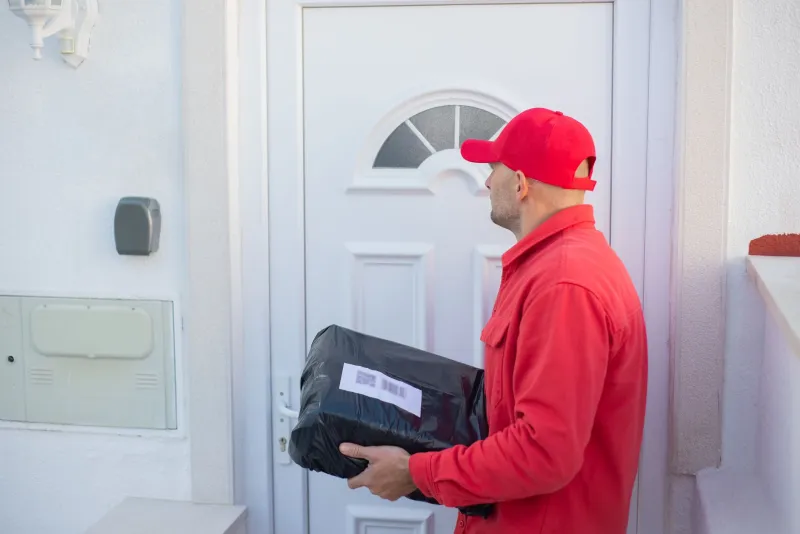
When a delivery driver arrives, scans a package as a failed attempt, and leaves a notice slip, the consequences cascade quickly. The customer contacts your support team. Your tracking platform shows a delivery exception. A redelivery is scheduled — often days later. In some cases, the customer abandons the process entirely and requests a refund before the package ever reaches their hands.
That is not a security outcome. That is a revenue loss event disguised as a compliance measure.
What Signature Confirmation Actually Costs
The direct costs are easier to quantify than most businesses realize. Carrier redelivery fees, return-to-sender processing charges, and replacement shipment costs can accumulate quickly across even moderate order volumes. A business shipping several hundred signature-required packages per month may be absorbing thousands of dollars in avoidable logistics expenses annually — without ever identifying signature failure as the root cause.
The indirect costs are harder to measure but arguably more damaging. A customer who experiences a failed delivery attempt does not simply reschedule and move on without forming an opinion. Research consistently shows that delivery experience is among the top three factors influencing repeat purchase decisions for US online shoppers. A single friction event at the final mile can interrupt what would otherwise have been a long-term customer relationship.
Your tracking data tells this story if you know how to read it. Delivery exceptions coded as "no recipient available" or "signature not obtained" that cluster around specific SKUs, carrier routes, or geographic zones are not random noise. They are a pattern — and patterns are addressable.
The Contactless Expectation Is Now a Baseline
The rapid normalization of contactless delivery during the COVID-19 pandemic did not reverse when restrictions lifted. It became a consumer expectation. Services like Amazon, Instacart, and DoorDash trained tens of millions of American consumers to expect delivery without physical interaction. That behavioral conditioning does not disappear because a business's carrier contract still defaults to signature required.
This creates a specific kind of tension: the customer completes a purchase assuming a standard drop-off experience, encounters a signature requirement at delivery, fails to receive the package on the first attempt, and attributes the failure to your business rather than to a carrier policy they never knew existed. The distinction is invisible to them. The reputational consequence lands with you.
Rethinking When Signature Confirmation Is Actually Warranted
The strategic response is not to eliminate signature confirmation entirely. There are shipment categories where it remains genuinely appropriate — high-value electronics, prescription medications, age-restricted products, and certain regulated goods all benefit from documented receipt. The problem arises when signature confirmation is applied as a blanket default rather than a targeted control.
A more effective approach segments shipments by actual risk profile. Consider the following framework:
Apply signature confirmation selectively, based on:
- Order value thresholds (for example, orders exceeding $300 or $500, calibrated to your margin and fraud exposure)
- Product category risk (items that are regulated, irreplaceable, or frequently disputed)
- Recipient history (new customers or accounts flagged for previous fraud patterns)
- Geographic delivery risk (areas with documented high package theft rates)
For the majority of standard e-commerce shipments that fall outside these parameters, contactless delivery with photo confirmation — now offered by most major US carriers including UPS, FedEx, and USPS — provides a meaningful and legally defensible proof-of-delivery record without requiring a human signature.
Photo Proof of Delivery: A Practical Middle Ground
Photo confirmation has matured considerably as a delivery verification tool. Modern carrier systems capture timestamped, geotagged images of the package at the point of delivery, documenting placement and location in a format that holds up well in dispute resolution. For the vast majority of e-commerce fraud claims, this level of documentation is entirely sufficient.
Integrating photo proof-of-delivery data into your shipment tracking workflow also creates a more transparent customer experience. When recipients receive a delivery notification that includes an image of their package at their door, the confirmation feels concrete and trustworthy. It reduces "where is my order" contacts to your support team and builds confidence in your fulfillment process — outcomes that a signature requirement, by contrast, rarely produces.
Auditing Your Carrier Agreements and Default Settings
Many businesses are surprised to discover that their signature requirements are not deliberately chosen policies at all — they are inherited defaults from carrier account setups that were never revisited. A systematic audit of your carrier agreements, service level configurations, and shipment label generation settings is a practical first step.
Work with your carrier account representatives to understand the full menu of delivery confirmation options available under your current contracts. Evaluate whether your shipping software or API integrations are applying signature requirements automatically based on outdated rules. If you operate across multiple carriers, ensure that your tracking platform consolidates this data so that signature-related delivery exceptions are visible in aggregate rather than buried within individual carrier portals.
Tracking platforms that surface exception patterns by delivery confirmation type give logistics managers the visibility needed to make these decisions with data rather than assumption.
The Competitive Dimension
It is worth noting that your competitors are having this same conversation. Businesses that optimize their delivery confirmation strategies — reducing unnecessary friction while maintaining appropriate controls — are creating a measurable advantage in customer satisfaction and repeat purchase rates. Those that continue applying blanket signature requirements are, in effect, subsidizing that advantage for the competition.
Delivery experience is no longer a back-office logistics consideration. It is a customer-facing product attribute, and it is one that modern tracking infrastructure makes increasingly measurable. The data is available. The tools exist. The question is whether your signature policy reflects the world your customers actually live in — or the one that existed when the policy was last reviewed.
For most US e-commerce businesses, the honest answer points clearly toward a revision.