Received and Forgotten: How Warehouse Dwell Time Becomes a Tracking Dead Zone — and What API Integration Can Do About It
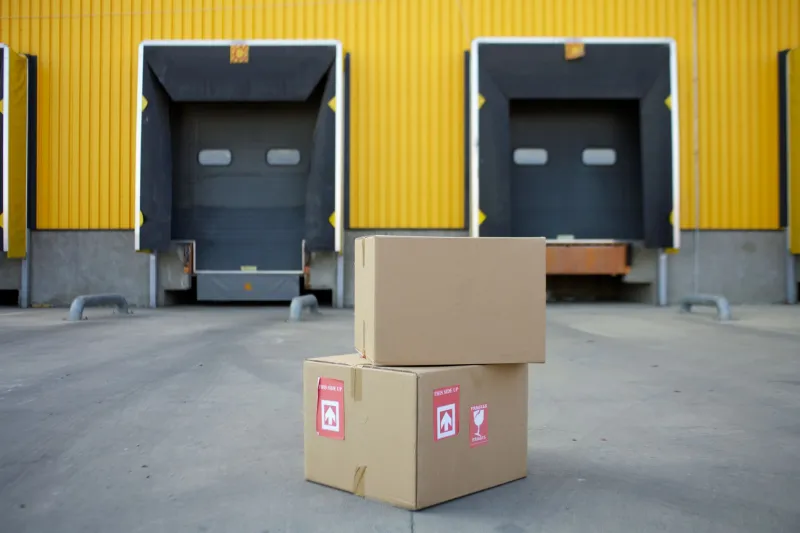
For many US businesses, the most dangerous moment in a shipment's lifecycle is not the last mile. It is the silence that follows the first scan.
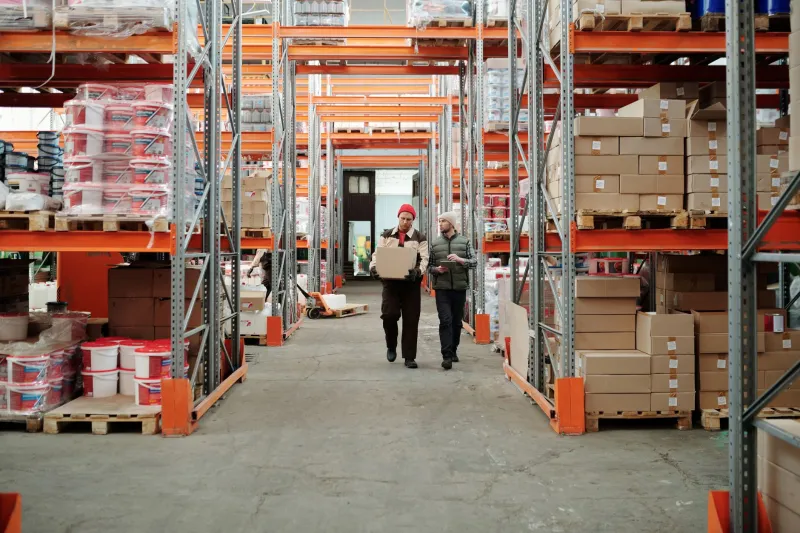
A package arrives at a regional fulfillment center or carrier warehouse. The intake system logs it. A status update fires — "Received at Facility" or "Awaiting Carrier Pickup" — and then nothing. Hours pass. Then a full day. Then two. The tracking portal sits frozen on that single entry while the shipment remains physically stationary, stacked somewhere among thousands of other units, its presence known to no one with any urgency.
This is what logistics professionals sometimes call the phantom pickup problem: a shipment that appears to be in motion because it has been acknowledged by a facility, but has not actually entered the transportation network. From the outside, it is indistinguishable from normal transit latency. From the inside, it represents a quiet operational failure that most tracking platforms are not built to surface.
Why Warehouse Dwell Time Is So Difficult to Detect
The core issue is architectural. Most shipment tracking systems are designed around carrier scan events — the discrete moments when a package is physically handled, scanned, and moved between nodes in the delivery network. That model works reasonably well once freight is genuinely in motion. It fails entirely when freight is stationary inside a facility that does not generate scan events for every hour a package sits on a shelf.
Warehouse management systems, or WMS platforms, operate on a different data layer than carrier tracking APIs. They record intake, storage location, pick-and-pack activity, and outbound staging — but that information rarely flows into the customer-facing tracking experience. The gap between a WMS intake record and a carrier departure scan is, for most platforms, a black hole.
The result is that a shipper checking their dashboard has no way of knowing whether a two-day pause in updates means the freight is moving through a legitimate handoff process or sitting untouched because a carrier failed to schedule a pickup, a dock appointment was missed, or a manifest error left the shipment off the outbound load.
The Business Consequences of Invisible Delays
For consumer-facing businesses, the damage is familiar: customer inquiries spike, support tickets accumulate, and trust erodes. But the problem is equally serious for B2B shippers managing supply chains with tight delivery windows.
Consider a manufacturing operation that relies on just-in-time component delivery. A three-day warehouse dwell event at a regional carrier facility does not show up as a delay in the tracking system — it shows up as silence. By the time the silence becomes a confirmed problem, the production schedule has already been disrupted. The cost of that disruption almost always exceeds the cost of the shipment itself.
The same dynamic plays out in retail replenishment. A seasonal inventory shipment that sits in a fulfillment center for 72 hours without any outbound scan can miss a critical sell-through window. The tracking record will eventually show the full journey, but it will not show the decision-making vacuum that existed while the delay was happening and no one knew.
What API-Level Warehouse Integration Actually Solves
The answer is not simply more frequent carrier scanning, though that helps. The more meaningful solution is connecting WMS data directly to the tracking layer so that dwell time becomes visible in near real-time rather than in retrospect.
When a tracking platform has API-level access to warehouse management data, it can do several things that standard carrier integrations cannot. First, it can establish an expected outbound window based on the facility's standard processing times. If a shipment has been in intake status for longer than that baseline, the system can flag it proactively — before the shipper or recipient notices anything unusual.
Second, it can distinguish between different categories of warehouse activity. A shipment in active pick-and-pack staging looks different in WMS data than a shipment sitting in a receiving bay with no outbound assignment. That distinction matters enormously for triage. The former requires no intervention. The latter requires immediate follow-up.
Third, integrated WMS data allows businesses to build historical dwell benchmarks by facility, carrier, and shipment type. Over time, those benchmarks become predictive. A facility that consistently holds certain freight classes for 18 to 24 hours before outbound scanning is exhibiting a pattern — one that can be incorporated into estimated delivery calculations and carrier performance reviews.
Why Most Platforms Still Leave This Gap Open
Despite the obvious value of WMS integration, most consumer-grade and even many enterprise tracking platforms do not offer it. The reasons are partly technical and partly commercial.
On the technical side, WMS platforms are notoriously fragmented. There is no single dominant system the way there is in, say, e-commerce order management. A logistics technology provider that wants to offer genuine WMS integration must build and maintain connections to dozens of different systems — a resource-intensive undertaking that many platforms have not prioritized.
On the commercial side, carriers have limited incentive to expose warehouse dwell data. Visibility into how long freight sits before departure is, in many cases, visibility into operational inefficiency. That is not information carriers are eager to broadcast through customer-facing tracking tools.
The burden therefore falls on shippers and logistics managers to demand this level of integration from their platform providers, and to evaluate carriers partly on their willingness to share facility-level data through structured APIs.
Practical Steps for Shippers Facing This Problem Today
For businesses that cannot immediately implement WMS-level integration, there are interim measures worth considering.
Establishing explicit SLA windows with carriers for outbound processing — and building those windows into your internal tracking expectations — at least gives your team a trigger point for proactive inquiry. If a shipment has not received a departure scan within a defined window after intake acknowledgment, that should automatically generate an internal alert.
Requesting facility-level performance data from carriers on a regular basis is also valuable. Most major US carriers will provide this information upon request, even if it is not surfaced in their standard tracking interfaces. Using that data to identify facilities with chronic dwell problems allows shippers to route time-sensitive freight around known bottlenecks.
Finally, communicating realistic transit expectations to customers — ones that account for typical warehouse processing time rather than assuming immediate departure — reduces the trust damage that silent delays cause. A customer who expects a shipment in five days and receives it in five days has a good experience, even if two of those days were spent in a warehouse. A customer who expects two-day delivery and receives a four-day delivery with no explanation does not.
The Tracking Standard Shippers Should Demand
The logistics industry has made significant progress in last-mile visibility over the past decade. Real-time GPS tracking, predictive delivery windows, and automated exception alerts have all raised the bar for what shippers and consumers expect.
But the warehouse dwell blind spot remains largely unaddressed, and it is costing businesses in ways that are difficult to quantify precisely because the data does not exist. That is the nature of a blind spot: the absence of information is itself the problem.
Closing that gap requires treating warehouse intake not as the end of the pre-shipment phase but as the beginning of a trackable, accountable transit event — one that should generate data, trigger timelines, and surface anomalies just as every other stage of the delivery journey does.
Until that standard becomes the norm, the phantom pickup will continue to haunt logistics operations that have otherwise invested heavily in shipment visibility.