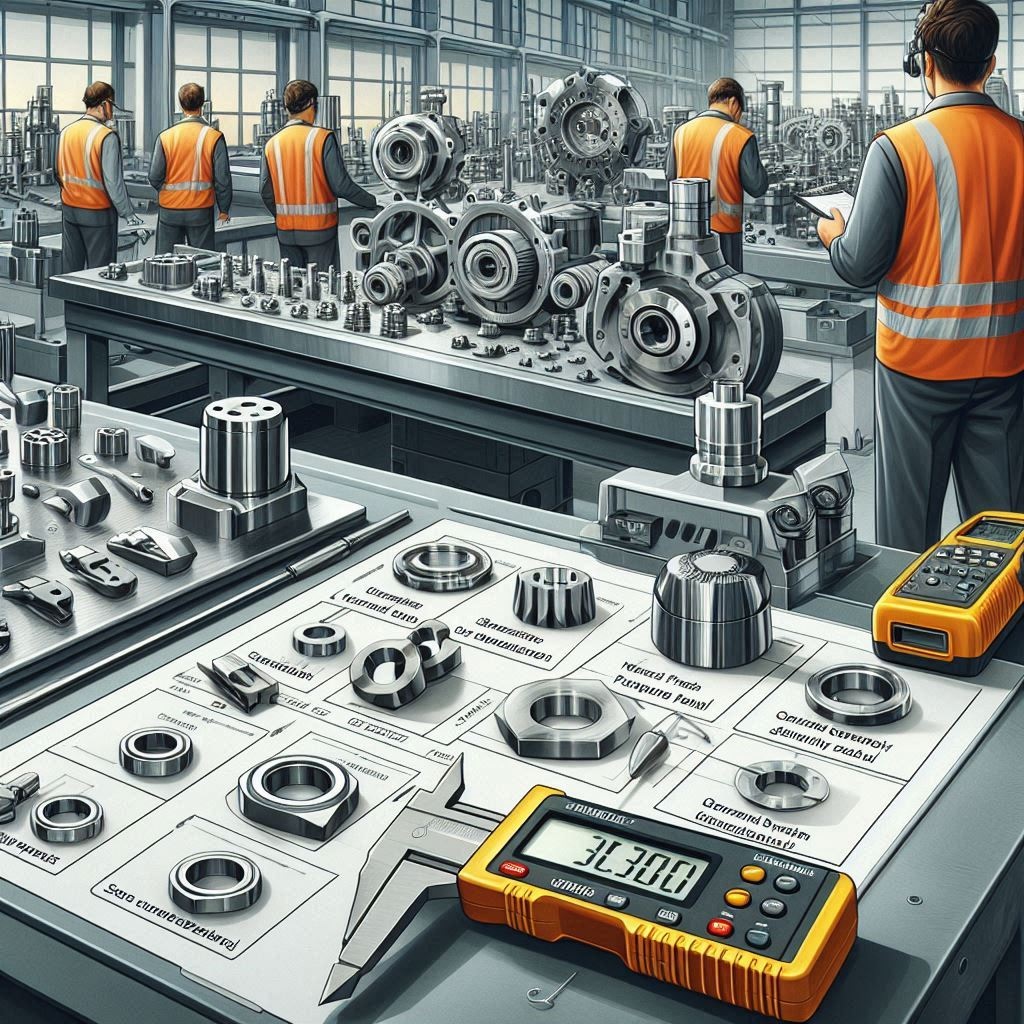

Forging gives strength. Machining gives accuracy.
A forged component may have directional grain flow, high mechanical integrity, and structural soundness. But until it is machined to final tolerances, it remains incomplete. Bearing seats, splines, threads, sealing faces, and mounting surfaces demand precision measured in microns. That precision does not come from the hammer. It comes from disciplined control over forging machining.
In critical industries, dimensional variation is not cosmetic. It affects alignment, load transfer, vibration, fatigue life, and safety. That is why serious manufacturers treat machining quality as an engineering discipline, not a finishing step.
At Sendura Forge Pvt. Ltd., machining is integrated into the broader manufacturing control framework. Every stage is measured. Every deviation is studied. Every parameter is documented.
Control Begins Before the First Cut
Quality in forging machining does not begin at the CNC console. It begins with the forged blank.
Before machining starts, the forged component is verified for:
- Material chemistry
- Mechanical properties
- Surface integrity
- Grain flow direction
Spectro analysis confirms composition. Mechanical testing validates tensile and impact values. Visual inspection identifies laps, scale pockets, or forging defects that could affect machining.
If the blank is inconsistent, machining cannot rescue it. Stable input ensures stable output.
CNC Precision Is Not Enough Without Process Discipline
Modern CNC machines are capable of tight tolerances. But machine capability alone does not guarantee quality.
True control includes:
- Validated machining programs
- Controlled cutting parameters
- Tool offset management
- Fixture repeatability
Process capability studies measure stability. Cp and Cpk values are monitored. If variation trends upward, correction happens before rejection begins.
In controlled forging machining, repeatability is engineered, not assumed.
Fixture Engineering Defines Dimensional Stability
A component can only be as accurate as the way it is held.
Improper clamping introduces distortion. Uneven support causes concentricity error. Vibration affects surface finish.
Quality-focused facilities invest in:
- Dedicated fixtures for each part
- Precision locating systems
- Balanced clamping forces
- Vibration-damping supports
Before mass production, fixture validation trials confirm positional accuracy. This prevents cumulative dimensional drift.
In-Process Inspection Prevents Accumulated Error
Final inspection alone is insufficient.
In-process checks are implemented at controlled intervals:
- First-piece approval
- Mid-batch verification
- Critical feature monitoring
- Tool wear dimensional review
On-machine probing systems reduce manual error. Coordinate Measuring Machines (CMM) validate complex geometries. Gauge repeatability studies ensure measurement reliability.
In structured forging machining, inspection is continuous, not reactive.
Tool Wear Monitoring Protects Surface and Tolerance
Cutting tools degrade with time. Edge rounding affects surface finish. Wear shifts dimensional output.
Quality control systems include:
- Tool life tracking
- Scheduled insert replacement
- Automated wear compensation
- Tool performance documentation
Replacing a tool before it fails costs less than rejecting an entire batch.
Stable tooling equals stable dimensions.
Surface Integrity Is Structural, Not Cosmetic
Surface finish affects fatigue life. Micro-tears or excessive roughness become crack initiation points under cyclic load.
To protect surface integrity, machining control includes:
- Optimized cutting speeds and feeds
- Proper coolant application
- Controlled vibration levels
- Surface roughness testing
Ra measurement confirms compliance. For rotating shafts, hydraulic components, and high-stress interfaces, surface control is a structural safeguard.
Effective forging machining improves both geometry and durability.
Heat Treatment Interaction with Machining
Some components are machined before final heat treatment. Others are heat-treated first and then finish-machined.
Both scenarios require control.
Heat treatment can introduce:
- Distortion
- Hardness variation
- Residual stress
Post-treatment inspection confirms dimensional stability. Hardness testing verifies mechanical compliance.
Machining allowances are calculated to accommodate predictable distortion patterns.
Without coordination between forging, heat treatment, and machining, precision becomes accidental.
Non-Destructive Testing Strengthens Reliability
For critical components, visual inspection is insufficient.
Non-destructive testing methods include:
- Ultrasonic testing
- Magnetic particle inspection
- Dye penetrant testing
These identify internal or surface discontinuities that machining cannot visually detect.
When integrated into forging machining, NDT prevents structural weaknesses from reaching assembly lines.
Statistical Process Control Reduces Rejection
Data is collected continuously:
- Dimensional trends
- Tool change intervals
- Machine temperature behavior
- Rejection causes
Statistical Process Control (SPC) identifies deviation before it exceeds tolerance.
Root cause analysis eliminates recurring defects. Control plans define corrective action. Process audits confirm adherence.
The objective is not to inspect quality into the part. It is to build quality into the process.
Calibration Protects Measurement Accuracy
Measurement tools must be as reliable as the machines that cut the metal.
Quality systems require:
- Periodic gauge calibration
- CMM validation
- Gauge R&R studies
- Environmental control in inspection areas
Temperature variation alone can alter dimensional readings.
Accurate measurement ensures that forging machining decisions are based on reliable data.
Integration of Forging and Machining Reduces Risk
When forging and machining operate in isolation, allowance errors occur. Over-machining increases cost. Under-machining causes rejection.
Integrated facilities coordinate:
- Forging draft angles
- Machining allowance
- Grain orientation with load direction
- Final tolerance requirements
Sendura Forge Pvt. Ltd., operating as a forging manufacturer in India, aligns forging design with machining capability. This integration improves material efficiency and dimensional predictability.
The result is reduced waste, stable output, and faster production cycles.
Documentation and Traceability Build OEM Confidence
Global customers demand traceability.
Quality documentation includes:
- Material heat number records
- Inspection reports
- Calibration logs
- Process parameters
- Batch identification
Each component can be traced to its raw material source and machining program revision.
Traceability transforms forging machining from production activity into controlled engineering practice.
Preventive Systems Lower Failure Rates
Failure Mode and Effects Analysis (FMEA) identifies risk areas before production scaling.
Control plans define:
- Critical dimensions
- Monitoring frequency
- Reaction strategy for deviation
- Responsibility matrix
Preventive maintenance keeps machines within tolerance capability. Scheduled alignment checks reduce geometric error.
Proactive control lowers rejection rates and stabilizes supply performance.
Final Validation Before Dispatch
Before shipment, components undergo structured review:
- Dimensional audit
- Surface verification
- Hardness confirmation
- Visual integrity check
- Documentation review
Only approved parts move to packaging.
This final barrier ensures that forging machining meets engineering intent and customer specification.
Conclusion
Forging creates strength. Machining defines precision. Quality control protects both.
Without disciplined inspection, controlled tooling, validated fixtures, calibrated measurement, and data-driven monitoring, machined forged parts cannot deliver consistent performance.
Quality in forging machining is not an optional layer added at the end. It is an engineered system that governs every stage — from forged blank verification to final dispatch.
For manufacturers such as Sendura Forge Pvt. Ltd., machining quality is a structural commitment. In industries where tolerance failure leads to operational failure, only controlled processes can deliver dependable components.
Precision is not achieved by chance. It is maintained by control.