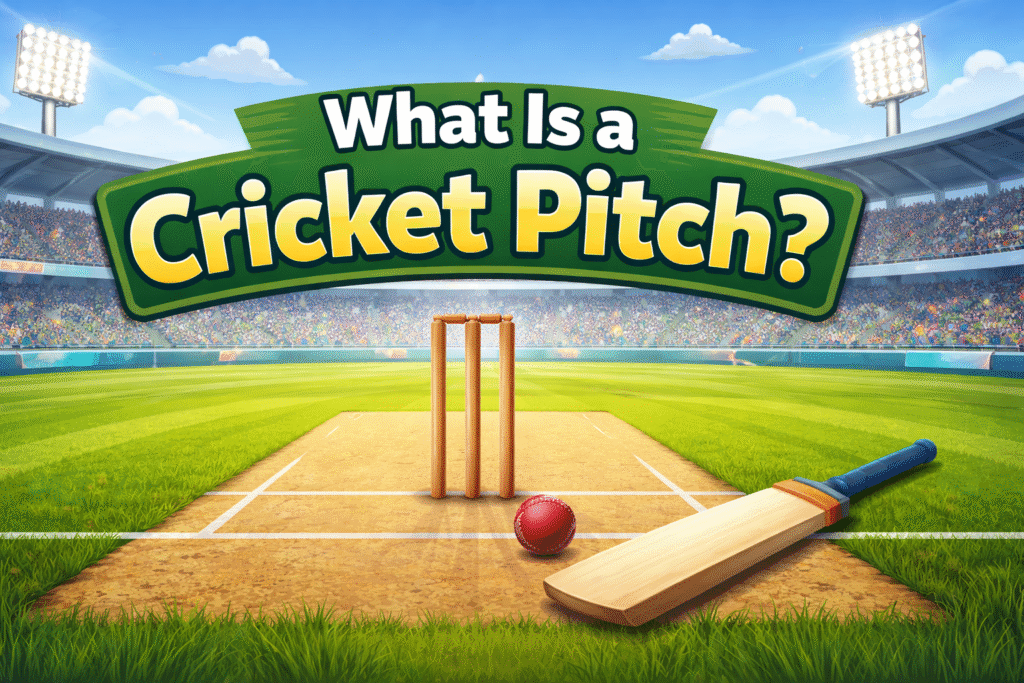

Cricket is one of the most popular sports in the world, but for beginners, some terms can be confusing. One such term is the cricket pitch. You may hear commentators talking about a “flat pitch,” a “green pitch,” or a “turning pitch,” but what does all that really mean?
If you are new to cricket or just want to understand the game better, this guide will help you. In this blog, we will explain what a cricket pitch is, how it is made, its size, different types of pitches, and how it affects the game — all in very simple words.
What Is a Cricket Pitch?
A cricket pitch is the rectangular strip in the middle of a cricket ground where the main action of the game happens. It is the area where the bowler bowls the ball, and the batter plays shots. Understanding cricket pitch types helps players and fans know what to expect from the game.
Every run, wicket, and delivery in cricket depends on the pitch. That is why it is often called the heart of the cricket match. Without a pitch, a game of cricket simply cannot take place.
The pitch is carefully prepared before every match to ensure fair play for both teams.
Where Is the Cricket Pitch Located?
The cricket pitch is located exactly in the center of the ground. It lies between the two sets of wickets—one for the batting side and one for the bowling side.
Many beginners confuse the pitch with the entire field. However, the pitch is only a small part of the ground. The rest of the area is called the outfield, which surrounds the pitch.
Think of the pitch as the main stage, while the rest of the ground is the supporting area.
What Are the Standard Dimensions of a Cricket Pitch?
The size of a cricket pitch is the same all over the world. This standard size helps maintain fairness in international and domestic matches.
Length of a Cricket Pitch
The length of a cricket pitch is 22 yards, which is equal to 20.12 meters. This distance is measured from the center of one wicket to the center of the other wicket.
The 22-yard length has been used in cricket for centuries and remains unchanged today.
Width of a Cricket Pitch
The pitch is 10 feet wide, which is about 3.05 meters. This width provides enough space for bowlers to deliver the ball and for batters to play shots safely.
Markings on a Cricket Pitch
There are several white lines marked on the pitch, known as creases. These include:
- Bowling crease
- Popping crease
- Return crease
These lines help umpires make decisions such as no-balls, run-outs, and stumpings.
What Is a Cricket Pitch Made Of?
A cricket pitch is usually made from a mixture of clay and soil, with a thin layer of grass on top. The exact composition can vary depending on the country and weather conditions.
Clay is important because it gives the pitch strength and bounce. Grass helps control how the ball behaves after pitching.
The pitch is rolled, watered, and trimmed carefully before a match. Good pitch preparation ensures that the surface is safe and playable for all formats of cricket.
How Does a Cricket Pitch Affect the Game?
The pitch plays a major role in deciding how a match unfolds. Teams often check the pitch before the toss to plan their strategy.
Impact on Batting
On flat pitches, batters enjoy good bounce and predictable ball movement. This allows them to play attacking shots confidently.
On difficult pitches, batters need strong technique and patience to survive.
Impact on Fast Bowling
Fast bowlers prefer pitches with grass or moisture. These conditions help the ball swing and seam after pitching.
On dry or flat pitches, fast bowlers may struggle to get much help.
Impact on Spin Bowling
Spin bowlers benefit from dry, dusty, or worn-out pitches. The rough surface allows the ball to turn sharply and trouble batters.
That is why spinners become more effective as the match goes on.
Cricket Pitch Rules You Should Know
Cricket pitches are governed by rules set by the International Cricket Council (ICC). These rules ensure player safety and fair competition.
Before a match begins, umpires inspect the pitch to confirm it is safe to play on. If a pitch is considered dangerous, the match can be delayed or even abandoned.
If a pitch deteriorates badly during a match and becomes unsafe, umpires have the authority to stop play.
Difference Between Cricket Pitch, Ground, and Field
Many beginners use these terms interchangeably, but they mean different things.
- Cricket Pitch: The central strip where bowling and batting happen
- Cricket Ground: The entire playing area, including pitch and outfield
- Cricket Field: The area where fielders stand during play
Understanding this difference helps you follow cricket discussions more easily.
Who Prepares the Cricket Pitch?
The person responsible for preparing the pitch is called the groundsman or curator. This role requires deep knowledge of soil, weather, and match requirements.
Pitch preparation can start several days before a match. The groundsman controls watering, rolling, and grass trimming to achieve the desired surface.
Different formats like Test matches, ODIs, and T20s require different pitch conditions.
Cricket Pitch in Different Formats of the Game
Test Match Pitch
Test match pitches are designed to last five days. They usually offer something for everyone — batters, fast bowlers, and spinners.
The pitch changes over time, making Test cricket more challenging and interesting.
ODI Pitch
ODI pitches are generally balanced. They support batting but also offer some help to bowlers.
These pitches encourage competitive matches with decent scores.
T20 Pitch
T20 pitches are mostly flat and batting-friendly. The focus is on entertainment, boundaries, and high-scoring games.
Bowlers need variations rather than pitch assistance in this format.
Interesting Facts About Cricket Pitches
The 22-yard length of the pitch comes from the old English measurement system. It has remained unchanged for over 250 years.
A pitch can behave differently on each day of a Test match due to weather, wear, and footmarks.
Some of the most famous cricket matches in history were decided mainly because of pitch conditions.
Conclusion
The cricket pitch is much more than just a strip of land. It plays a key role in shaping every match, influencing batting, bowling, and match results.
For beginners, understanding the pitch makes watching cricket far more enjoyable. You can better understand why teams choose certain players and why matches change direction.
Now that you know what a cricket pitch is and how it works, you are one step closer to truly understanding the game of cricket.
Frequently Asked Questions About Cricket Pitch
What is the length of a cricket pitch?
The length of a cricket pitch is 22 yards or 20.12 meters.
Can a cricket pitch change during a match?
Yes, especially in Test matches. Pitches wear out and crack over time.
Which pitch is best for batting?
A flat pitch is considered best for batting.
Why do cricket pitches crack?
Cracks form due to drying, footmarks, and continuous play over several days.
Please visit the home page: https://trackcourier.xyz/