Where Deliveries Go Wrong: Solving the Last-Mile Bottleneck Before It Costs You Customers
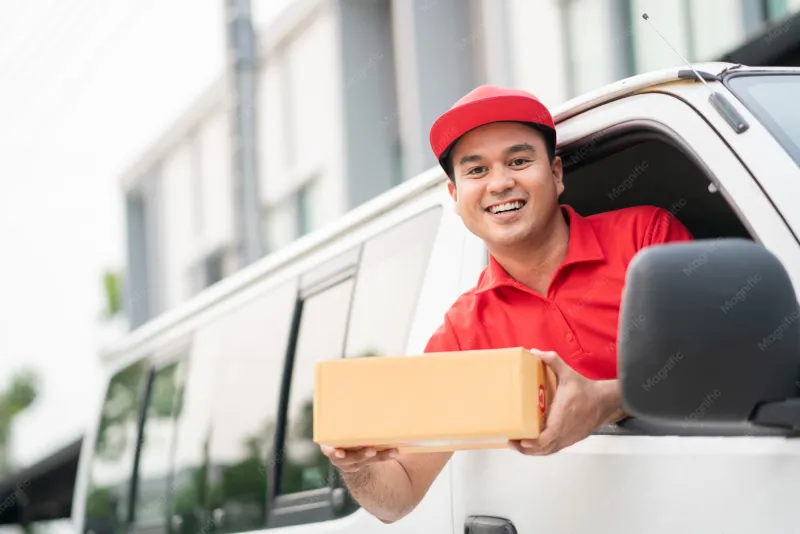
Photo: delivery driver scanning package at residential doorstep urban neighborhood, via img.freepik.com
A package can travel 2,000 miles across the country without incident — cleared through distribution centers, transferred between carriers, and loaded onto long-haul trucks with clockwork precision. Then it enters the last ten miles. And that's where things fall apart.
Last-mile delivery — the final leg of a shipment's journey from a local depot to the recipient's address — is widely recognized as the most expensive, most complex, and most failure-prone segment of the entire logistics chain. According to industry research, last-mile delivery accounts for more than 50 percent of total shipping costs and is responsible for the overwhelming majority of missed delivery windows, lost packages, and customer service escalations.
For businesses and consumers alike, understanding why this phase is so problematic — and what modern tracking solutions can do about it — is no longer optional. It's a competitive necessity.
Why the Final Miles Are the Hardest
The challenges that define last-mile logistics are fundamentally different from those found earlier in the supply chain. Long-haul freight operates on predictable routes, controlled environments, and consolidated loads. Last-mile delivery is the opposite: fragmented, unpredictable, and deeply dependent on local conditions.
Consider a single delivery driver completing a route in a mid-sized American city. That driver may be responsible for 80 to 150 individual stops in a single shift, navigating traffic congestion, apartment complexes with restricted access, residential streets without clear signage, and customers who aren't home during the delivery window. Each of these variables introduces a potential point of failure.
Common last-mile breakdown points include:
- Failed delivery attempts due to recipient absence, with no clear re-delivery process communicated
- Incorrect or incomplete address data that routes drivers to wrong locations
- Depot handoff delays when packages arrive at local facilities late and miss daily route assignments
- Driver capacity overload during peak periods, causing packages to be held an additional day
- Lack of real-time communication between the carrier and the recipient, leaving both parties without actionable information
Each of these failure points is compounding. A package that misses its route assignment on Monday may not be re-attempted until Wednesday. By then, the customer has already contacted your support team — and their trust in your brand has eroded.
The Visibility Gap: What You Can't See, You Can't Fix
One of the most significant contributors to last-mile failure is not a physical logistics problem — it's an information problem. When a package moves from a regional distribution center to a local delivery depot, tracking updates frequently go dark. The shipment has technically entered the last mile, but neither the business nor the customer can see where it is or when it will arrive.
This visibility gap creates a cascade of downstream problems. Customers call support lines asking for updates that representatives cannot provide. Businesses have no data to identify which drivers, routes, or facilities are generating the most failures. And when a package is marked as "delivered" but never received — a frustratingly common scenario — there is no granular location data to investigate the claim.
Real-time tracking technology directly addresses this gap. Platforms like TrackCourier aggregate carrier data from multiple sources and surface live shipment status at the package level, giving businesses and their customers continuous visibility from origin to doorstep. When a delivery attempt fails, the system logs it immediately — not hours later — enabling faster re-routing decisions and proactive customer notifications.
How Real-Time Tracking Reduces Last-Mile Failures
The operational benefits of continuous shipment visibility extend well beyond customer communication. When businesses have access to granular, real-time delivery data, they can identify systemic problems that would otherwise remain invisible.
Proactive exception management is one of the most impactful applications. When a tracking platform detects that a package has not moved for an unusual period — or that a delivery scan has not occurred within an expected window — alerts can be triggered automatically. This allows logistics teams to intervene before a delay becomes a failure, whether that means contacting the carrier, updating the recipient, or initiating a re-delivery request.
Delivery confirmation with location data adds an additional layer of accountability. Rather than a simple "delivered" status, modern tracking integrations can capture GPS coordinates at the time of delivery scan, providing evidence of where and when a package was left. This is particularly valuable for high-value shipments and for resolving disputes between carriers and recipients.
Route performance analytics give businesses the data they need to evaluate carrier performance at the local level. If a specific depot or regional carrier partner is consistently generating failed delivery attempts, that pattern becomes visible — and actionable — through aggregated tracking data over time.
What Businesses Can Do Right Now
Addressing last-mile failures requires a combination of operational adjustments and technology adoption. Here are practical steps that shippers can implement without overhauling their entire logistics infrastructure:
-
Standardize address validation at checkout. A significant percentage of last-mile failures originate with incomplete or incorrect address data entered by the customer. Address validation tools integrated at the point of purchase catch errors before a package ever leaves the warehouse.
-
Enable real-time delivery notifications. Customers who receive accurate, timely updates about their delivery window are significantly more likely to be present or make alternative arrangements. Automated SMS and email notifications, triggered by live tracking events, reduce failed first-attempt deliveries meaningfully.
-
Centralize your carrier tracking in one platform. Businesses that ship with multiple carriers — a common practice for cost optimization — often struggle to maintain consistent visibility across providers. A unified tracking platform eliminates the need to monitor multiple carrier portals and ensures that exception alerts are never missed.
-
Review your carrier SLA compliance regularly. Last-mile performance data should be reviewed against the service level agreements you have with your carriers. Patterns of non-compliance are grounds for renegotiation — or for switching providers on specific routes.
-
Communicate proactively when delays occur. When a package is delayed in the last mile, the worst outcome is silence. Customers who receive a proactive update — even one that delivers bad news — are far more forgiving than those who discover a delay on their own. Automated delay notifications, powered by real-time tracking data, make this communication scalable.
The Cost of Inaction
Last-mile delivery failure is not a niche logistics problem — it's a direct threat to customer retention and brand reputation. Research consistently shows that a significant majority of online shoppers will not return to a retailer after a poor delivery experience. In a market where consumers have more purchasing options than ever, the quality of your fulfillment process is inseparable from the quality of your product.
The technology to address these failures is available and increasingly accessible to businesses of all sizes. The question is not whether last-mile tracking and visibility tools are worth the investment — it's how quickly you can implement them before the next delivery failure costs you a customer you can't afford to lose.
At TrackCourier, our platform is built specifically to close the visibility gap where it matters most: the final miles of every shipment. Because that's where your customer's experience is ultimately decided.