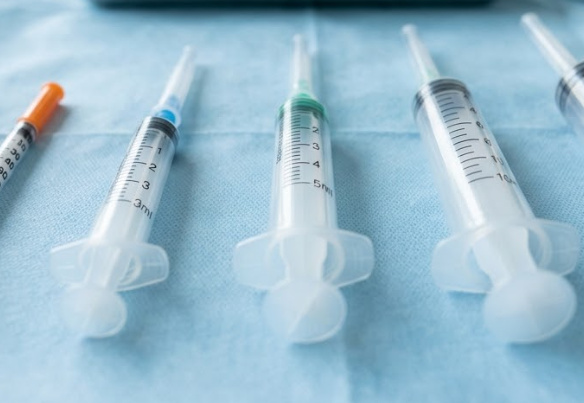

Medical syringes and needles are among the most commonly used medical devices for delivering fluids, medications, and other liquids to patients during clinical treatments and emergency scenarios.
Depending on the type of medical concerns patients have, different types of syringes are used. Both patients and healthcare professionals should have a clear understanding of the different types of syringes and their medical uses to improve healthcare practices.
Brief Idea About Medical Syringes
You must have a deep idea about the basic components of medical syringes before you start breaking down the different categories of it. There could be four different segments of a syringe as follows:
- Plunger
The plunger is the part that plays the most important role while disbursing the medicine. It functions like a piston that can be pulled out to extract medicine. When you push it back to the barrel, it expels the medicine precisely with the help of the needle.
- Barrel
This is the middle part of the syringe which holds the medicine. It has indication marks that help medical professionals understand the amount of the dose.
- Hub
The hub is located at the end of the barrel, which helps in the attachment of needles to the medical syringe.
- Needle
This is the last but most important part of a syringe, which actually dispenses the medicine to the patients. It is basically a metal tube, having a very sharp tip which can precisely pierce the skin.
Together, the medical syringe can extract the liquid form of medicine or other types of fluid from its source container, hold it in the barrel and expel it accurately to the patients. The basic functionality remains the same, but different syringes can be used to treat different medical scenarios.
Different Types of Medical Syringes and Their Uses
Let’s unwind the different categories of medical syringes to have a clear vision of their types and functionalities:
Classification Based on Capacity
The following are the different types of medical syringes categorised as per their capacity:
- 1 mL Syringes
These are 28-31G needles best suited for hormone doses and allergy tests, etc. It perfectly serves the purposes where small dose disbursement is required. Insulin syringes fall into this category.
- 2-5 mL Syringes
These types of syringes are usually needed while giving vaccinations, intramuscular injections, antibiotics, etc. This syringe can be perfectly suited for most of the adult injections. Its needle has a thickness of 22-25 G, and it can pierce their skin precisely.
- 10 mL Syringes
These types of syringes are used for drawing blood samples, punching IV drops, larger IM doses, etc. 20-22 G needles are used to pair with this type of medical syringe for easy application.
- 20-60 mL Syringes
These syringes are used for wound cleaning, irrigations, enteral feeding, tube maintenance, etc.
Classification Based on Design and Style of the Tip
Now, let’s classify professional syringes and needles based on their design and tip style:
- Hypodermic Syringes
These kinds of medical syringes are used for general purposes and can efficiently expel a 1-60 mL dose. You can use this syringe for disbursing medicine through all the following four injection paths, namely SC, IM, IV, or intradermal routes. Both thinner and thicker needles can be attached to this. The thicker needles are used for blood, and the thinner ones for painless push.
- Insulin Syringes
Insulin syringes are specially designed to take insulin shots. They have bold markings for measuring doses, pre-attached needles, and special low-dead-space manufacturing for effective delivery of medicine.
- Tuberculin Syringes
Tuberculin syringes are mostly used in pediatric care. The syringe has a 1 mL medicine disbursement capacity with 0.01 mL graduations. It functions through SC or intradermal paths, and it uses 26-27G short-sized needles to pierce the skin smoothly without much pain.
- Oral/Enteral Syringes
This syringe doesn’t have a needle, but rather has a blunt tip, typically used to feed meds, liquids, etc. via mouth or tubes. The syringe comes in various sizes from 1 to 60 mL. It can be used for children, adults, or for NG feeds.
- Catheter Tip Syringes
This type of injection has a blunt, tapered tip, used for flushing out urinary catheters, wounds, toxic fluids, surgical sites, etc. It is used for surgical patients and elderly people who have mobility issues. The size and the barrel capacity of this syringe vary from 10 to 60 mL.
- Eccentric Tip Syringes
Eccentric tip syringes feature off center nozzle design, where the needle can shift to one side, allowing the injection to take support from the barrel wall, while pushing the medicine. This improves the patient’s comfort, as the gap between the needle bevel and skin is minimal. The injection comes in 5-20 mL sizes.
- Safety Syringes
These types of syringes are also called retractable or shielded needles and syringes. The syringe can function just like any other hypodermic syringe. But soon after you inject the syringe, the needle creates a protective sheath around it.
So that when you pull the needle back, it can prevent needle stick injuries. These syringes can effectively be used during blood drawing, vaccination, emergency care, etc.
Specialised Medical Syringes
The following are some of the specialized Medical syringes that have significant uses:
- Toomey Syringes
These are bulb-operated, a special type of medical syringe, used during critical surgeries. The bulb is attached to the plunger all g with a thumb ring. No needle is attached to this syringe, and it has a wide, blunt tip. It can suck out fluid or push it back in with cleaning solutions.
- Venom Extraction Syringes
These are vacuum-based extraction syringes, specially designed to extract venom or poison from patients’ bodies.
- Multi-Shot Syringes:
This type of syringe can give multiple doses. But they are rarely used because of contamination issues.
- Regional Anaesthesia Syringes
These are specially designed large capacity syringes, with low friction, used to give local anaesthesia to patients. The syringes can come in different sizes, from 20 to 50 mL.
Conclusion
A better understanding of syringes and needles will help medical professionals to do their job in a better way. Also, having sufficient knowledge, patients can understand which type of syringes are being used in their treatments and why. You should also consider the thickness of the needle before selecting any specific syringe. If you are a newbie in the medical field, always seek expert opinion while selecting the best medical syringe for your patient.
