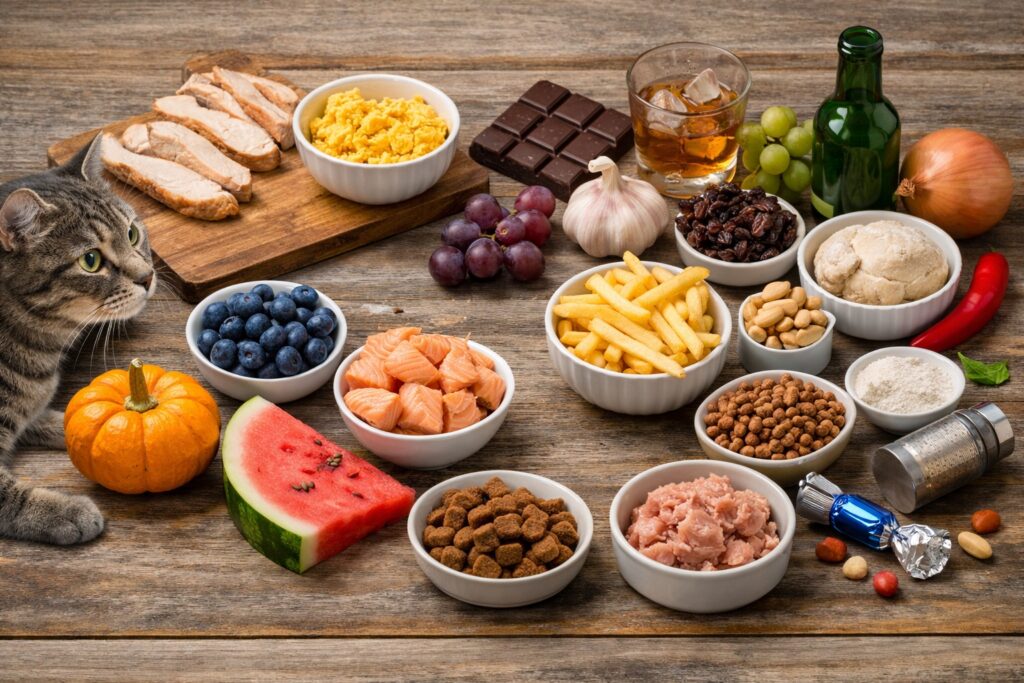

Many cat parents in the USA love sharing little moments with their pets—especially during snack time. That curious stare, the gentle paw tap, the hopeful meow… it’s hard to resist. But before slipping your cat a bite from your plate, it’s important to ask: are human foods safe as cat treats?
Not all human foods are dangerous, but many can cause digestive issues, nutritional imbalances, or even serious health problems in cats. Understanding what’s safe, what’s risky, and what should never be shared can help you protect your cat’s health while still enjoying treat time responsibly.
This guide breaks it all down—what you can share, what you should avoid, and when it’s better to stick with proper cat treats.
Why Cat Treat Safety Matters More Than You Think
Cats are obligate carnivores, meaning their bodies are designed to thrive primarily on animal protein. Unlike humans (or even dogs), cats lack certain enzymes needed to safely digest many common foods.
When human foods are offered too often or without care, they can lead to:
- Upset stomach, vomiting, or diarrhea
- Weight gain and obesity
- Nutrient deficiencies
- Long-term issues like kidney or urinary problems
That’s why treats—whether human food or packaged cat treats—should make up no more than 10% of your cat’s daily calories.
Human Foods That Are Generally Safe as Occasional Cat Treats
Some human foods can be shared in small, plain, and unseasoned portions. These should never replace regular meals but can be offered occasionally.
1. Cooked Lean Meats
Plain, cooked chicken, turkey, or beef (no salt, spices, onions, or garlic) can be safe. These closely resemble what cats naturally eat and are often used in high-quality cat treats.
2. Cooked Fish (In Moderation)
Small amounts of cooked salmon or tuna can be offered occasionally. Avoid raw fish, smoked fish, or canned fish with added salt.
3. Plain Scrambled or Boiled Eggs
Eggs are a good protein source when fully cooked. Serve in tiny portions and only once in a while.
4. Certain Fruits (Very Small Amounts)
Some cats tolerate foods like blueberries or watermelon. These offer hydration more than nutrition and should never become a habit.
5. Plain Cooked Pumpkin
Pumpkin (not pie filling) can help with digestion and is sometimes recommended by vets for mild constipation.
👉 Even with “safe” options, moderation is key. Overfeeding human foods can still crowd out balanced nutrition.
Human Foods You Should NEVER Share With Cats
Many foods that are harmless—or even healthy—for humans can be toxic to cats.
🚫 Toxic or Dangerous Foods for Cats
- Onions, garlic, chives (even powdered forms)
- Chocolate and caffeine
- Grapes and raisins
- Alcohol
- Xylitol (found in sugar-free products)
- Raw dough or yeast
- Fatty or fried foods
- Spicy or heavily seasoned foods
These foods can cause symptoms ranging from stomach upset to organ failure. If your cat consumes any of them, contact your vet immediately.
Are Human Foods Better Than Packaged Cat Treats?
This is a common question among pet parents trying to “do better” for their cats.
While some human foods are safe, they’re not nutritionally complete or balanced for cats. High-quality cat treats are specifically formulated to meet feline dietary needs, making them a safer and more reliable option.
When choosing the best cat treats, look for:
- Animal protein as the first ingredient
- Limited fillers and artificial additives
- Clear calorie information
- Treats appropriate for your cat’s age and health
Human foods should be viewed as occasional extras, not replacements for proper cat treats.
What About Popular Store-Bought Treats?
Many USA pet parents also wonder about mainstream treat brands and viral snack options.
Are Temptations Bad for Cats?
This is one of the most searched questions among cat owners: are temptations bad for cats?
The answer isn’t black and white. These treats are generally safe when fed in moderation and according to feeding guidelines. However:
- They are calorie-dense
- Overfeeding can contribute to weight gain
- They should never replace meals
If your cat loves them, portion control is essential. Mixing in healthier or lower-calorie cat treats can help balance indulgence with nutrition.
Why Some Cats React Badly to Human Foods
Even foods considered “safe” can cause issues for certain cats. Reasons include:
- Lactose intolerance (common in adult cats)
- Sensitive stomachs
- Food allergies
- Age-related digestion changes
If you notice vomiting, diarrhea, lethargy, or behavior changes after sharing food, stop immediately and consult your vet.
Healthier Alternatives to Sharing Human Food
If you want to treat your cat without the risks of human food:
- Use freeze-dried meat cat treats
- Choose low-calorie training treats
- Break treats into smaller pieces
- Reserve treats for bonding or training moments
This way, your cat still enjoys variety and rewards—without compromising health.
Final Thoughts:
Sharing food can feel like love, but for cats, safety matters more than sentiment. While a few plain human foods can be offered occasionally, the safest approach is sticking with high-quality cat treats designed specifically for feline nutrition.
Understanding what’s safe—and what isn’t—helps you make smarter decisions, avoid emergency vet visits, and keep treat time both fun and healthy.
FAQs
1. Can human food replace cat treats?
No. Human foods lack the balanced nutrients cats need. Cat treats are formulated specifically for feline health and are a safer option.
2. What human foods are safest as cat treats?
Plain cooked meats, small amounts of cooked eggs, and plain pumpkin are among the safest options when fed occasionally.
3. Are temptations bad for cats if fed daily?
Feeding them daily in large amounts isn’t recommended. If you’re asking are temptations bad for cats, the key issue is portion control and moderation.
4. How many cat treats can I give per day?
Cat treats should make up no more than 10% of your cat’s daily calorie intake, regardless of whether they’re human foods or packaged treats.
5. What are the best cat treats for health-conscious pet parents?
The best cat treats are high in animal protein, low in fillers, and clearly labeled for calorie content and feeding guidelines.
Read more: Food for Small Pets That Supports Teeth, Gut & Energy