
Overhead cable systems remain the backbone of electrical power transmission and distribution worldwide. From national utilities and EPC contractors to industrial power projects, overhead cables offer a cost-effective, efficient, and proven method for delivering electricity over long distances. As power demand grows and grid infrastructure modernizes, selecting the right overhead cable becomes a critical engineering and procurement decision.
At HNBF Power, we manufacture high-quality overhead conductors and power cables designed to meet international standards and perform reliably in diverse climatic and loading conditions. This guide explains what overhead cables are, their key types, applications, selection criteria, and why quality manufacturing matters for long-term grid performance.
What Is an Overhead Cable?
An overhead cable is an electrical conductor installed above ground on poles or transmission towers to carry power from generating stations to substations and end users. Unlike underground cables, overhead cables dissipate heat efficiently, are easier to inspect, and offer lower installation and maintenance costs for large-scale transmission and distribution networks.
Overhead cables are widely used in:
- High-voltage and medium-voltage transmission lines
- Urban and rural distribution networks
- Industrial power supply systems
- Renewable energy grid connections
Common Types of Overhead Cables
AAC (All Aluminum Conductor)
AAC overhead cables are made entirely of aluminum strands. They offer high conductivity and are commonly used in urban distribution networks where span lengths are shorter and corrosion resistance is important.
Key advantages:
- Excellent electrical conductivity
- Lightweight structure
- Good corrosion resistance
AAAC (All Aluminum Alloy Conductor)
AAAC conductors use aluminum alloy to achieve higher tensile strength than AAC. They are suitable for longer spans and areas with higher mechanical loads.
Typical applications:
- Medium-voltage overhead lines
- Coastal or corrosive environments
- Distribution and sub-transmission systems
ACSR (Aluminum Conductor Steel Reinforced)
ACSR overhead cables combine aluminum strands with a steel core, offering superior mechanical strength and sag control. They are widely used in long-distance transmission lines.
Why utilities prefer ACSR:
- High strength-to-weight ratio
- Excellent performance over long spans
- Proven reliability in high-voltage networks
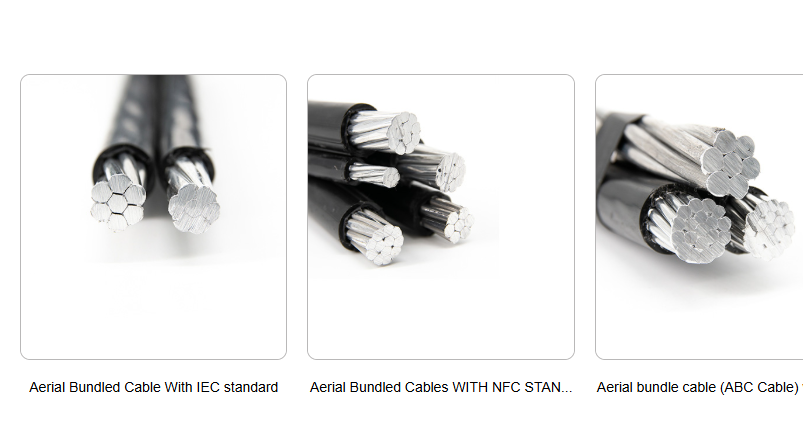
ABC (Aerial Bundled Cable)
ABC systems bundle insulated conductors together, improving safety and reducing power theft. They are increasingly popular in urban and semi-urban distribution projects.
Benefits of ABC overhead cable:
- Improved safety
- Reduced line losses
- Lower maintenance requirements
Key Advantages of Overhead Cable Systems
Cost-Effective Installation
Overhead cables require less civil work compared to underground systems, making them ideal for large transmission and rural electrification projects.
Easy Inspection and Maintenance
Faults can be visually identified and repaired quickly, reducing downtime and operational costs.
Thermal Performance
Open-air installation allows efficient heat dissipation, enabling higher current-carrying capacity.
Flexibility for Network Expansion
Overhead cable networks are easier to modify or extend as demand increases.
How to Select the Right Overhead Cable
Electrical Requirements
Engineers must evaluate voltage level, current capacity, and power losses to choose the appropriate conductor type and size.
Mechanical Strength
Span length, wind load, ice load, and terrain determine whether AAC, AAAC, or ACSR is the most suitable option.
Environmental Conditions
Coastal, desert, or industrial areas may require corrosion-resistant materials and specialized conductor designs.
Standards and Compliance
High-quality overhead cables should comply with IEC, ASTM, BS, or other relevant international standards to ensure safety and performance.
Why Manufacturing Quality Matters
The performance of an overhead cable depends heavily on raw materials, stranding accuracy, and quality control during production. Poor manufacturing can lead to excessive sag, energy losses, and premature failure.
HNBF Power applies strict quality management systems and advanced manufacturing processes to produce overhead conductors with consistent electrical and mechanical properties. Our products are tested to meet the demanding requirements of power utilities, EPC contractors, and grid operators worldwide.
Applications of Overhead Cables in Modern Power Systems
- National transmission and distribution networks
- Utility grid upgrades and expansions
- Industrial power distribution
- Renewable energy evacuation lines
- Rural and urban electrification projects
Overhead cables continue to play a vital role in building resilient, efficient, and scalable power infrastructure.
Overhead cables differ mainly in mechanical strength, conductivity, and application suitability. AAC offers excellent conductivity and corrosion resistance, making it ideal for short-span urban distribution lines. AAAC provides higher tensile strength than AAC and performs well in coastal or corrosive environments with longer spans.
ACSR combines aluminum conductivity with a steel core for superior mechanical strength, making it the preferred choice for long-distance, high-voltage transmission. ABC enhances safety with insulated, bundled conductors, reducing losses and theft in urban networks. Selecting the right overhead cable depends on voltage level, span length, environmental conditions, and project cost-efficiency goals.
Frequently Asked Questions (FAQs)
1. What is the difference between overhead cable and underground cable?
Overhead cables are installed above ground and are generally more cost-effective and easier to maintain, while underground cables offer better aesthetics but higher installation costs.
2. Which overhead cable is best for long-distance transmission?
ACSR is commonly used for long-distance and high-voltage transmission due to its high mechanical strength and load-carrying capacity.
3. Are overhead cables suitable for harsh environments?
Yes. With proper material selection such as AAAC or specialized coatings, overhead cables can perform reliably in corrosive and extreme climates.
4. How long do overhead cables last?
High-quality overhead cables can last 30–50 years or more when manufactured to standards and properly maintained.
5. Can HNBF Power customize overhead cable specifications?
Yes. HNBF Power provides customized conductor designs based on project requirements, standards, and environmental conditions.
Partner with HNBFPower for Reliable Overhead Cable Solutions
Choosing the right overhead cable is essential for building safe, efficient, and long-lasting power networks. With extensive manufacturing expertise and a global supply capability, HNBF Power delivers overhead conductors and power cables trusted by utilities and EPC contractors worldwide.
Contact HNBF Power today to discuss your project needs and receive customized overhead cable solutions engineered for performance, reliability, and long-term value.