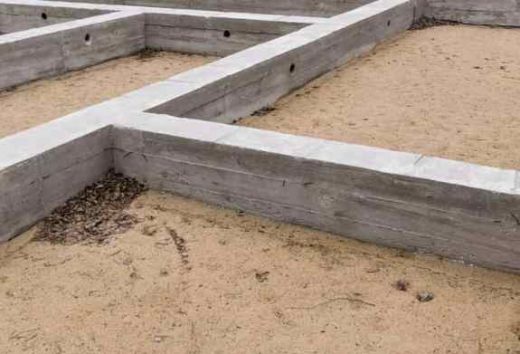

Every building needs a strong foundation to stay safe and stable. The foundation carries the weight of the structure and transfers it to the ground. One of the most common foundation types used in construction is the spread footing. Builders and engineers trust spread footings because they are simple to design, easy to build, and cost-effective.
In this blog, we will explain what a spread footing is, how it works, its types, advantages, materials, construction process, and why it remains an important foundation choice in modern construction.
What Is a Spread Footing?
A spread footing is a shallow foundation that spreads the load of a building over a large area of soil. It reduces pressure on the ground and helps prevent excessive settlement. Engineers place spread footings directly under columns, walls, or load-bearing parts of a structure.
Spread footings work best when the soil near the surface has good strength and stability. This makes them ideal for low-rise buildings and residential construction.
How a Spread Footing Works
The main job of a spread footing is to distribute weight evenly. When a building applies load to the footing, the footing spreads that load across a wider soil area. This lowers stress on the soil and keeps the building stable.
Workers excavate the ground to a required depth and prepare a level base. They place reinforcement steel and pour concrete into the excavation. Once the concrete cures, the footing becomes a strong base that supports the structure above.
Types of Spread Footings
Engineers select different types of spread footings based on building design and site conditions.
Isolated Spread Footing
An isolated spread footing supports a single column. It is usually square or rectangular. Builders commonly use this type in buildings with spaced columns.
Continuous Spread Footing
A continuous spread footing supports a load-bearing wall. It runs along the entire length of the wall and distributes loads evenly.
Combined Spread Footing
A combined spread footing supports two or more columns. Engineers use it when columns are close together or near property boundaries.
Strap Footing
A strap footing connects two isolated footings with a concrete beam. This design balances loads when one column is near the edge of a site.
Materials Used in Spread Footings
Concrete and steel reinforcement form the main materials in spread footings. Concrete provides compressive strength, while steel bars resist tension and cracking.
Builders use proper concrete mix designs to ensure durability. Quality materials and proper placement improve the life of a spread footing.
Advantages of Spread Footings
Simple Construction Process
Spread footings are easy to build. Contractors use standard tools and methods, which reduces complexity and errors.
Cost-Effective Solution
Compared to deep foundations, spread footings cost less. They require less excavation, material, and labor.
Suitable for Many Buildings
Spread footings work well for houses, small commercial buildings, and low-rise structures.
Easy Inspection and Maintenance
Because they are shallow, engineers can inspect and maintain spread footings easily.
Limitations of Spread Footings
Spread footings do not work well in weak or loose soil. They also struggle under very heavy loads. In such cases, deep foundations provide better support.
Engineers always conduct soil tests before choosing spread footings.
Common Applications of Spread Footings
Spread footings support many types of construction projects, including:
- Residential houses
- Apartment buildings
- Commercial offices
- Schools and hospitals
- Warehouses
- Small industrial facilities
Their versatility makes them one of the most popular foundation systems.
Spread Footing vs Other Foundation Types
Spread footings differ from pile foundations and mat foundations. Piles transfer loads deep into the ground, while spread footings rely on surface soil. Mat foundations cover large areas and support heavy structures.
For smaller buildings, spread footings provide the most economical solution.
Importance of Soil Testing
Soil testing helps engineers determine soil strength and bearing capacity. Proper soil analysis ensures that spread footings perform safely and avoid settlement problems.
Construction Process of Spread Footings
The construction process includes:
- Excavation and site preparation
- Soil compaction
- Formwork and reinforcement placement
- Concrete pouring
- Curing and finishing
Each step affects performance and durability.
Why Spread Footings Remain Popular
Spread footings remain popular because they offer reliability and affordability. They support many structures efficiently and require simple construction methods.
Final Thoughts
A spread footing remains one of the most reliable and widely used foundation systems in construction. Its simple design, strong performance, and cost-effective nature make it an excellent choice for many residential and low-rise commercial buildings. By spreading the load of a structure over a larger soil area, a spread footing helps maintain stability and reduces the risk of uneven settlement.
When engineers match the footing design with proper soil conditions, spread footings deliver long-term strength and safety. Their shallow depth allows easier construction, inspection, and maintenance compared to deep foundation systems. This simplicity saves both time and money while still providing dependable support.
Spread footings also offer flexibility. Builders can adapt their size and shape to support walls, columns, or multiple structural elements. With the use of quality materials and correct construction methods, these footings can last for decades without major issues.
In modern construction, where efficiency and durability matter, spread footings continue to prove their value. They combine practicality with performance and remain a smart foundation choice for projects that require strength without unnecessary complexity.