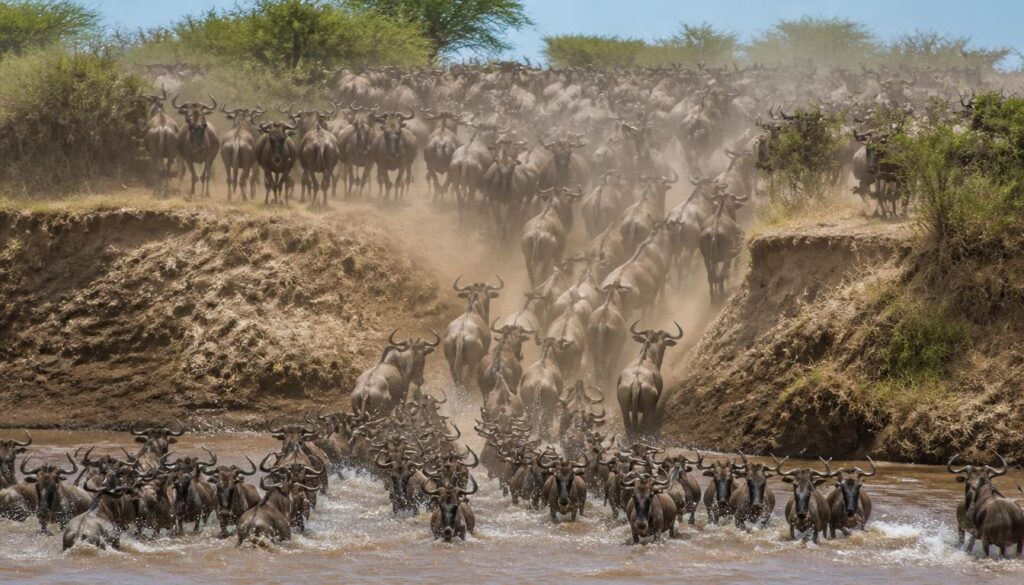

The Great Migration is one of the most breathtaking wildlife events on Earth, drawing travelers from around the world to East Africa. Every year, over a million wildebeest, along with zebras and gazelles, move across the Serengeti–Mara ecosystem in search of fresh grazing land. Understanding the timing of this journey is essential if you want to plan the best time to see wildebeest migration and witness its most dramatic moments.
Understanding the Wildebeest Migration Cycle
The migration is not a single event but a continuous, circular movement that follows rainfall patterns across Tanzania and Kenya. The animals travel roughly 1,800 miles in a year, making their way through the Serengeti National Park and into the Masai Mara National Reserve.
The movement is driven by survival instincts—fresh grass, water availability, and safe calving grounds determine their route and timing.
Best Time to See Wildebeest Migration
The best time to see wildebeest migration depends on what you want to experience. Different months offer different highlights, from calving season to dramatic river crossings.
January to March – Calving Season (Southern Serengeti)
This is one of the most exciting times to visit. Around 400,000 calves are born within a few weeks, attracting predators like lions, cheetahs, and hyenas.
- Best for: Predator action and newborn wildlife
- Location: Southern Serengeti (Ndutu region)
- Highlights: Birth of calves, intense predator-prey interactions
April to May – Green Season Movement
During this period, herds begin moving northwest as rains continue. The landscapes are lush, and crowds are smaller.
- Best for: Scenic photography and fewer tourists
- Location: Central and Western Serengeti
- Highlights: Large herds on the move
June to July – Grumeti River Crossings
As the dry season begins, herds gather near the Grumeti River. Some early river crossings occur, though not as intense as later in the season.
- Best for: Early river crossings and safari value
- Location: Western Serengeti
- Highlights: First major migration challenges
August to October – Mara River Crossings (Peak Season)
This is widely considered the best time to see wildebeest migration. Massive herds cross the dangerous Mara River into Kenya’s Masai Mara, facing crocodiles and strong currents.
- Best for: Dramatic river crossings
- Location: Northern Serengeti & Masai Mara
- Highlights: Iconic wildlife scenes, predator encounters
November to December – Return Journey
After grazing in Kenya, the herds begin moving back south toward the Serengeti as rains return.
- Best for: Migration return movement
- Location: Southern Serengeti
- Highlights: Large herds traveling together
Factors That Affect Migration Timing
While the migration follows a general pattern, it is not fixed to exact dates. Several natural factors influence timing:
- Rainfall patterns
- Grass availability
- Predator pressure
- Herd movement behavior
Because of this, flexibility in travel planning is important when aiming for the best time to see wildebeest migration.
Where to Experience the Migration
Top locations to witness the migration include:
- Serengeti National Park (Tanzania)
- Masai Mara National Reserve (Kenya)
- Ndutu Plains (Calving season hotspot)
- Grumeti River (Western corridor crossings)
Each region offers a different perspective of the migration cycle.
Travel Tips for Planning Your Safari
To make the most of your safari experience:
- Book early during peak migration months
- Choose mobile camps for better herd access
- Stay flexible with travel dates
- Hire experienced safari guides
- Carry good binoculars and cameras
Proper planning ensures you don’t miss key wildlife moments.
Final Thoughts
The wildebeest migration is a year-round natural wonder, but the experience changes depending on when you visit. If your goal is to witness river crossings and dramatic predator action, the dry season between July and October is often considered the best time to see wildebeest migration. However, each stage of the journey offers its own unique and unforgettable wildlife experience.
By understanding the timing of this incredible movement, travelers can plan a safari that delivers the most rewarding and memorable wildlife encounters in Africa.
