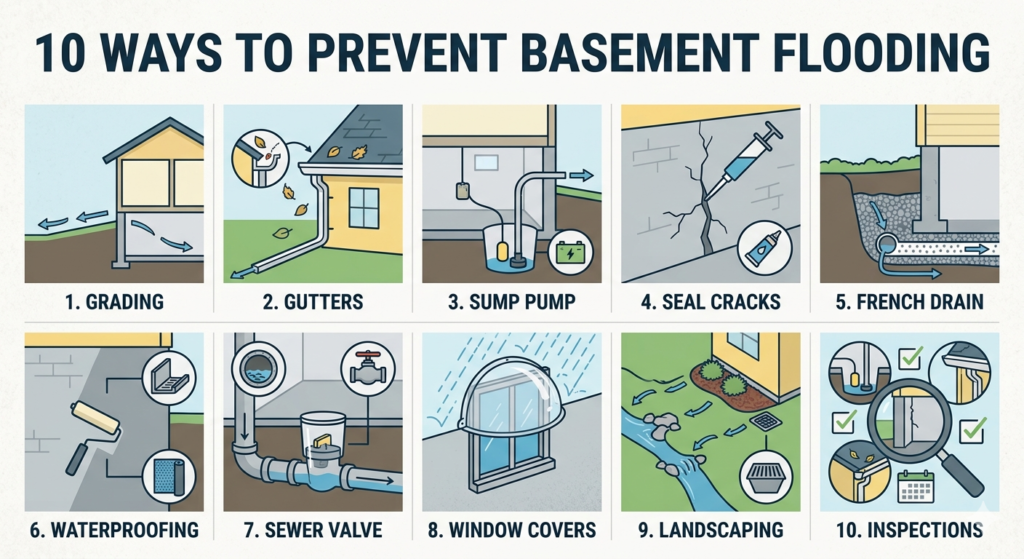

Basement flooding is one of the most frustrating and costly problems homeowners face, especially during periods of heavy rainfall. What starts as a small seepage issue can quickly escalate into significant water damage, mold growth, and expensive repairs. The good news is that basement flooding is largely preventable with the right strategies and proactive maintenance.
In this comprehensive guide, we’ll explore 10 proven ways to prevent basement flooding during heavy rain, helping you protect your home, belongings, and peace of mind. Whether you’re dealing with minor dampness or recurring water intrusion, these solutions will give you a strong defense against water damage.
Understanding Why Basements Flood
Before diving into prevention methods, it’s important to understand why basements flood in the first place. Heavy rain saturates the soil surrounding your home, increasing hydrostatic pressure against your foundation walls. This pressure forces water through cracks, joints, and porous concrete. Poor drainage systems, clogged gutters, and improper grading can further worsen the situation.
By addressing these root causes, you can significantly reduce the risk of flooding.
1. Ensure Proper Grading Around Your Home
One of the simplest yet most effective ways to prevent basement flooding is proper grading. The ground around your home should slope away from the foundation, not toward it.
Why It Matters
When rainwater flows toward your home, it accumulates near the foundation, increasing the chances of seepage.
What You Can Do
- Maintain a slope of at least 6 inches over 10 feet away from your foundation
- Add soil where needed to correct low spots
- Avoid planting water-retaining vegetation too close to the house
Proper grading directs water away before it has a chance to cause damage.
2. Clean and Maintain Gutters and Downspouts
Clogged gutters are one of the leading causes of basement flooding. When gutters overflow, water cascades down the sides of your home and pools around the foundation.
Key Steps
- Clean gutters at least twice a year (spring and fall)
- Remove leaves, debris, and dirt buildup
- Install gutter guards for easier maintenance
Downspout Tips
- Extend downspouts at least 6–10 feet away from your home
- Ensure they discharge onto a slope that directs water away
Neglecting this simple task can lead to major water issues during heavy rainfall.
3. Install a Reliable Sump Pump System
A sump pump is your basement’s first line of defense against flooding. It collects excess water and pumps it away from your home.
Types of Sump Pumps
- Submersible pumps (quiet and efficient)
- Pedestal pumps (easier to maintain)
Best Practices
- Test your sump pump regularly
- Install a battery backup system in case of power outages
- Keep the sump pit clean and free of debris
If you’re serious about long-term protection, investing in a high-quality sump pump is essential.
4. Seal Foundation Cracks and Gaps
Even small cracks in your foundation can allow water to seep into your basement during heavy rain.
Common Problem Areas
- Wall cracks
- Floor cracks
- Gaps around pipes and utility lines
Solutions
- Use epoxy or polyurethane injections for crack sealing
- Apply waterproof sealants to walls
- Inspect your foundation annually for new cracks
Sealing these entry points is a critical step in preventing water intrusion.
5. Install a French Drain System
A French drain is an underground drainage system designed to redirect water away from your foundation.
How It Works
It consists of a perforated pipe surrounded by gravel that collects and channels water away from your home.
Benefits
- Reduces hydrostatic pressure
- Prevents water buildup around the foundation
- Works well in areas with heavy rainfall
For homeowners dealing with persistent water issues, a French drain can be a game-changer.
6. Waterproof Your Basement Walls
Interior and exterior waterproofing methods can significantly reduce the risk of basement flooding.
Interior Waterproofing
- Apply waterproof coatings to walls and floors
- Install interior drainage systems
Exterior Waterproofing
- Use waterproof membranes on foundation walls
- Install drainage boards and weeping tiles
For professional solutions and long-term protection, consider exploring basement waterproofing solutions to safeguard your home against water damage.
7. Maintain Your Sewer and Drain Systems
During heavy rain, municipal sewer systems can become overwhelmed, leading to water backing up into your basement.
Preventive Measures
- Install a backwater valve to prevent reverse flow
- Avoid flushing non-degradable items
- Schedule regular sewer line inspections
Warning Signs
- Slow drains
- Gurgling sounds
- Foul odors
Addressing these issues early can prevent a major flooding event.
8. Install Window Well Covers
Basement windows are vulnerable entry points for rainwater, especially if they are below ground level.
Why Covers Help
Window well covers prevent rainwater, debris, and snow from accumulating in the well.
Additional Tips
- Ensure proper drainage in window wells
- Keep wells clean and free of leaves
- Use durable, well-fitted covers
This simple addition can make a big difference during storms.
9. Upgrade Landscaping and Drainage Features
Your landscaping plays a crucial role in how water flows around your property.
Smart Landscaping Tips
- Use gravel or mulch instead of soil near the foundation
- Install swales or drainage channels
- Avoid overwatering plants near your home
Drainage Enhancements
- Add catch basins to collect excess water
- Install dry wells to disperse runoff
Thoughtful landscaping can significantly reduce water accumulation around your home.
10. Schedule Regular Inspections and Maintenance
Preventing basement flooding isn’t a one-time task—it requires ongoing attention.
What to Inspect
- Foundation cracks
- Drainage systems
- Sump pump functionality
- Gutters and downspouts
When to Act
- Before the rainy season
- After major storms
- When you notice signs of moisture
For expert guidance and professional help, you can rely on basement flood prevention experts to ensure your home stays dry year-round.
Additional Tips for Extra Protection
While the above methods cover the essentials, here are a few extra tips to further safeguard your basement:
Install a Dehumidifier
Reducing moisture levels helps prevent mold growth and keeps your basement dry.
Elevate Valuable Items
Store important belongings on shelves or platforms to protect them from potential water damage.
Use Water Alarms
Install water sensors that alert you at the first sign of moisture.
Signs Your Basement May Be at Risk
Being proactive means recognizing warning signs early. Watch out for:
- Damp or musty odors
- Water stains on walls or floors
- Efflorescence (white powdery residue)
- Mold or mildew growth
- Peeling paint or wall coverings
If you notice any of these, it’s time to take action before the next heavy rain hits.
The Cost of Ignoring Basement Flooding
Ignoring basement flooding can lead to:
- Structural damage
- Mold remediation costs
- Loss of personal belongings
- Decreased property value
Preventive measures are far more affordable than dealing with the aftermath of a flood.
Final Thoughts
Basement flooding during heavy rain is a common but preventable problem. By implementing these 10 proven strategies, you can significantly reduce your risk and protect your home from costly water damage.
From proper grading and gutter maintenance to installing sump pumps and waterproofing systems, each step plays a crucial role in keeping your basement dry. The key is consistency—regular inspections and timely upgrades will ensure long-term protection.
Don’t wait until the next storm exposes weaknesses in your home. Take action today and invest in the safety and durability of your property.